Dealing with the unexpected while traveling abroad is bad enough, but when things go wrong overseas it’s not only frustrating, it can be scary. Different culture, surroundings, language and currency all heighten the chaos in a bad situation. However, if you stay calm and treat these problems as just part of the experience, you’ll find they’re easier to manage.
Certain issues, while inconvenient, don’t have to be entirely unexpected. For instance, if you forget your adapters or converters, you should be aware that duty-free shops in airports are a great place to stock up on these gadget-aids. If you don’t notice until you’ve reached your hotel? Ask the concierge! The hotel may have extras you can use, and otherwise, the concierge can direct you to the nearest hardware store. If you feel homesick, head straight for comfort food or retail therapy. Try an Egg McMuffin, a Starbucks latte, or pull out the iPad and watch a little American TV.
Yet there are more disconcerting issues you might face. You might walk into a public toilet and find it’s a hole in the ground. While this is a reality you might more readily expect while outside of the first world, this can surprise you anywhere from England to China. Things to do about it: Check the bathroom sign (often it will tell you if it is a squat toilet) and carry a small pack of toilet paper or towelettes in your bag.
In the event that your client takes you to what you thought was a nightclub, but turns out to be a gentleman’s club, you should remain respectful but true to yourself. In some countries, this type of entertainment is accepted as part of a normal business day. As a woman, it can be uncomfortable and embarrassing. You can grin and bear it, or bow out gracefully. There is not necessarily a right answer, but as a female business traveler you should be aware that you might face this dilemma. Never force yourself into a situation in which you feel uncomfortable.
In another example of the expect-able unexpected, transportation strikes are not uncommon, especially in Europe. Generally, the public is given advance notice of strikes (a quick internet search can give you some information about strikes in your area – try GoneOnStrike, SummerInItaly - for strikes in Italy only, or FCm Travel Alerts) but there occasions when the public is caught off guard.
Here are some tips on how to deal:
If you learn of a planned airline strike, and are scheduled to fly on the day of the strike, call to see if you can get a flight change (free of financial penalty, of course).
Public transportation strikes may require a lot of walking. Ask the concierge or local friends for tips and advice – they know the more about the transportation system, but they also know shortcuts.
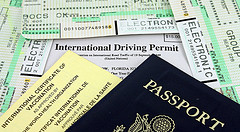
If you lose your passport, contact your country’s nearly embassy or consulate for help (here is the list of US embassies and consulates). If you are a United States citizen, you will need complete the lost-passport application you will get from the embassy or consulate. You will need proof of citizenship (this is where having a copy of you passport comes in handy!), two passport photos (get replacements before going to the embassy), and proof of identity (driver’s license or birth certificate). There will also be a fee for a replacement.
Getting a traffic ticket abroad is not much different from getting one at home, except you won't be able to contest it (check out this article on fishy traffic tickets). Stay aware of the customs and road laws. Of course, there will always be the truly uncontrollable. The best fix is to keep calm under pressure and stay hyper-prepared - true Woman Road Warrior words to live by.
Going Global: Top 9 Things to Remember when Planning an International Trip
2/17/11
Traveling overseas can be exciting and nerve-wracking. You can’t wait to enjoy the scenery and different cultures. But you also don’t want to embarrass yourself in front of a client or get yourself into a dangerous situation.
The key to avoiding trouble is of course planning. So to acclimate more quickly, conduct business more easily and enjoy yourself more, you need to consider the following:
1.Time Zones: Keep two master calendars for your trip – one for the time zone you’ll be in and one for the time zone at home. When I’m setting up a schedule for a trip, I’ll use the calendar for the time zone I will be in, whether I’m planning meetings there or calls home. I transfer those dates and times to my home-time calendar and leave it with my assistant to update. I also leave one at home with my family so they can keep track of me. To check time zones, check out worldtimeserver.com or timeanddate.com/worldclock.
2.Holidays: Every country has different holidays and people there usually think everybody knows what they are. So don’t get caught showing up to do business in the middle of a holiday. Even if your client is willing to work, public transportation and other services may not be available. So check online before you get there – wikipedia.org has a list of holidays by country.
3.Weather: Packing is a pain when you’re just going a few states over. When you’re heading overseas it can be even more daunting. Be sure to check weather.com for all your destinations. And remember that most of the world uses Celsius, not Fahrenheit. So be sure to double-check that you are too.
4.Currency: Most countries use a different currency than you have at home. You need to know what the local currency is where you’re going and how to convert it into your home currency. Bloomberg.com has a currency converter that will identify the local currency for the country (ies) you’re visiting and convert them into your home currency. To make it simpler on yourself, use a credit card as much as possible – especially for large ticket items, such as hotels, plane tickets and meals. You can also use your ATM card but be sure to only use it at a bank-based facility. Avoid the free-standing machines because they have been proven less secure.
5.Language: It’s not necessary to have much knowledge of the language of the country you’re visiting. But many business travelers find they get better treatment if they at least learn a few phrases to show they are trying. So learn the basics: hello; goodbye; please; thank you; yes and no and the numbers one through ten.
6.Risks, Warnings, Sanctions: Obviously in some parts of the world, the government is in flux and crime is rampant. Foreigners are easy targets, particularly women – so take extra precautions. Many women who work for global firms hire a local company to advise them on security issues before and during their trip. Often they will have a security team escort them to and from meetings – even dinner – and act as personal bodyguards. If you’re not part of a large organization, there are several resources you can check online for security information: Government travel warnings, U.S. Treasury sanctions and country risk forecasts. Risks, warnings and sanctions should be taken seriously.
7.Etiquette: Probably the most important subject to study before you travel internationally. What are the business customs and procedures for your destination? A faux pas could cost you business. Some cultures treat proper etiquette more seriously than we do in the U.S. Do research on gift giving, tipping, meeting protocol, food customs, even hand gestures. Other countries have different views of women in business so it’s good to learn what to do to fit in. A favorite resource for learning proper business etiquette is Culture Connect.
8.Entertainment: Another critical subject that shouldn’t be taken lightly. You should know what is expected of you wherever you are going. If you have colleagues in your host country, ask them. Also check with your human resources department. It’s hard to imagine a business trip overseas that doesn’t include some kind of client entertainment. Find out what is expected. And don’t wait until the last minute to make arrangements.
9.Sports: They may not be at the top of your favorite things list but sports play an important role in the culture of other countries, just like in the U.S. So take a few minutes to learn what sports are big in your destination so that you can show you’re taking an interest in the culture. Again, Wikipedia.org can be a great source of sports information for around the world.
For more global travel tips, check out my book - The Woman Road Warrior: An Expert’s Guide to Domestic and International Business Travel.
Airline club memberships or Priority Passes seem to be at the top of every frequent flier’s wish list (and many occasional travelers who’ve only heard about the fabulous benefits). They want the chance to get away from the chaos of the terminal and relax, freshen up, have a cocktail, read a book or check their email.
In a recent Woman Road Warrior Day survey, many women mentioned airport clubs as their favorite travel perk:
“The Northwest lounge is great – clean, spacious bathrooms, a free glass of wine or Bloody Mary, free wifi and charging, cheese and crackers to go.”
“I love the Continental lounge – it’s quiet, I can wash up, relax and feel a little pampered while waiting for my connecting flight.”
You don’t have to be flying first class or a business traveler to venture into this passenger nirvana. Many airport clubs and lounges sell 1-day passes. And one of the best places to try one out, according to Bob Batz, Jr. of the Pittsburgh Post-Gazette is The Oasis at JFK Airport in New York.
He writes that anyone wanting to spend $45 can make her way in. You get up to 5 hours of all the food you can eat, all the beverages you can drink, including free beer, wine and liquors. There are clean bathrooms with showers, lots of comfy places to stretch out, computers with internet access and free wi-fi, TVs, magazines, just about anything you could ever want is inside this lounge. It’s owned by KLM and caters to VIP passengers on 10 airlines but independent travelers are definitely welcome.
“Wow - sign me up,” says Woman Road Warrior Traveler-in-Chief, Kathy Ameche. “Free food, drink and wi-fi? When flying first class on international flights, there's a separate airport lounge one can go to and get free food and drink - it's not as diverse as the Oasis. I had been a Red Carpet (UAL) club member for years. Yes, you got free drink (non alcoholic) - you had to pay for the alcohol. As for food – you got chips, peanuts, granola bars and fruit. Hardly the food they were describing at the Oasis."
Kathy says she'd go out of her way to stop there. "At $45 for up to five hours - I'd plan long layovers just to hang out and experience the food/drink etc. I'd say it's about a wash if you and your spouse are traveling through JFK, and have a layover that requires getting food."
United Red Carpet offers 1-day passes for $50 at the airport or $35 online at United.com. The passes are only valid for one location. Say you’re traveling from Chicago to Denver – you can only use it in one city. But you can use them at any Red Carpet or Continental Presidents Club worldwide. You can get a 1-day pass for American’s Admiral Club as well – its $50 passes are good for multiple locations.
If you want more than a 1-day pass, here’s a Woman Road Warrior tip - check with your employer. If your organization has a formal travel and entertainment policy, find out if it allows the cost of the club membership to be a reimbursable expense. If not, but you are a senior member of the company, see if an exception can be made. If your company won’t reimburse you, but you are a member anyway, do yourself a favor: If you see your boss or another senior member of your company waiting at the gate, invite her to join you in the lounge. Club rules usually allow a member to bring up to two guests.
Is this your version of the perfect flight? Relaxing quietly in first class, reading a magazine? No disruptive children screaming or kicking your seat? That's the dream of some recently surveyed fliers in the U.K.
The Business Travel and Meetings Show polled 1000 business travelers about what annoyed them most about flying first class. 74-percent said children. This is not a new topic for debate but it continues to rile people up.
Business travel writer David Richardson likes the idea of keeping kids out of first class. “I definitely think introducing an adults-only cabin or service is a good idea and it would work well on high-frequency routes so that families could be accommodated on other services.” He suggested that airlines such as British Airways or Virgin Atlantic add an adults-only cabin.
I have no problems with kids on a plane. My frustration is when the parents expect everyone else to take care of their children instead of themselves. AND new mothers - babies scream on the descent because their ears get clogged due to the pressure. You'd scream as well with that kind of build up. Bring a bottle; give a toddler something to suck on. Help them out.
I also think flying with your children on a business trip can be beneficial to them. In my book, The Woman Road Warrior: An Expert Guide to Domestic and International Business Travel, I talk about how many woman road warriors take their children along on the road. It allows the kids to see Mom balancing family and work demands in a new context and how well it can be done. And they learn travel skills such as how to pack and take responsibility for their belongings. It also is a chance to practice their manners – how to quickly clear the airplane aisles when they get to their assigned row or how to store their items in the overhead bins immediately and take their seats. All good lessons for future road warriors.
Many Southwest frequent fliers are wondering what the changes to the airline's Rapid Rewards program mean to them. For some perspective on the new plan, we asked Brett Snyder to break down the pros and cons for Woman Road Warriors. He is the president/writer of crankyflier.com, an award-winning consumer travel blog.
WRW:Up until now, how has SW’s rewards program been perceived by business travelers – is it beneficial? What have they liked/disliked about it?
Brett Snyder: Southwest's traditional short-haul business traveler has generally liked the program. It's simple; they can fly a bunch of $39 one way short flights and rack up the freebies pretty quickly. But there are definitely drawbacks. You could only redeem for flights on Southwest and that meantno exotic beach vacation in the Maldives or even a beach in Hawaii (since the airline only flies within the contiguous United States). The more traditional business traveler also doesn't like the lack of elite benefits. Southwest did create “A-List” a couple years ago but it didn't have much to it. (The A-List offers frequent fliers access to the best boarding pass number available and priority lanes at select check-in and security checkpoints).
WRW: What's Southwest’s main motive for changing the rewards program? We've read it’s to attract more business travelers who tend to spend more.
Brett Snyder: This is all about attracting business travelers. It's true that business travelers tend to pay more because they either book at the last minute or they need flexibility. Those are the travelers willing to pay more for convenience, but Southwest wasn't really creating an incentive for them.
WRW: What’s the best part of the new program for business travelers? Is determining awards by price/points instead of # of flights going to make it more attractive?
Brett Snyder: It depends who's answering the question. The beefed up elite program is certainly going to be attractive to frequent fliers. And it does help build incentives for people who pay more for their tickets since they can now earn more. Using the dollar-based program will be more attractive to those who spend more, but it's likely to be less attractive to those who buy cheap tickets and those who fly primarily shorter flights. That's really how it should be, but not everyone is happy about that.
WRW:What will they be unhappy with?
Brett Snyder: Again, it depends who's talking. It takes a lot longer to earn a free ticket if you fly on low fares or short flights (where fares are lower). So that will turn the traditional Southwest flier off. It's also going to be a lot more difficult to redeem for last minute flights (when prices are higher), so people have been complaining about that. Southwest's continued move away from an egalitarian program where everyone is treated equally will also anger people. Lastly for me, it's that requirement that you have a Southwest credit card to unlock all the benefits that rubs me the wrong way. (The new “More Rewards” program which allows you to use points for international flights, hotel stays, rental cars and event tickets is only available to Southwest Airlines Rapids Rewards Chase cardmembers. If you want access to the program, you have to apply for the credit card).
WRW: If you’re already a SW frequent flier, any tips for taking advantage of the new program or things to watch out for?
Brett Snyder: Well, pay more for your tickets and you can earn more! I personally find the program pretty straightforward, but I know that others think it's too complex. The key is to pay more and then you'll earn more. It looks like there is fairly good earning potential at hotel and car rental partners, (You can earn 2 points per $1 spent on purchases at participating Southwest hotel and rental car partners), so that's a good tip for building up your points. Other than that, we'll see how long it takes for people to figure out the best way to maximize their value.
Thanks to Brett for sharing his insights. Let us know what you think about the changes.
Southwest Airlines’ New Frequent Flier Program Aimed at Business Travelers
Southwest, making the first change in its loyalty program in 23 years, went all out,
spending close to $100 million on the project which aims to win new customers and
deepen ties to existing business travelers, who, as we know, generally pay higher prices.
The old program was based on credits.One flight = one credit.When you got 16 credits
you got a free flight but- you couldn’t collect credits beyond 16 and there was no difference in the reward between short flights and long flights.Awards were for Southwest flights only.
The new program is based on points, which in turn are based on ticket price and fare category.These can be accumulated for larger awards and have no expiration.That is, there is no expiration date as long as the account remains active in a 24-month period.There are no blackout dates for redemption and no limit on awards redeemed per flight, according to Ryan Green, Southwest senior director for loyalty.
Points can also be redeemed through a third-party provider for international and Hawaii flights as well as hotels and rental cars, even though Southwest flies only in the continental U.S.Points can also be purchased under the new program, to speed up getting an award.Watch for Southwest to add a second elite-flier category with additional benefits for those who travel most often.
The carrier unveiled awebsiteto explain the changes, which go into effect on March 1st.